Written by Tom Wang
This article was originally published on BusinessMirror on April 15, 2026.
Two weeks after President Marcos declared a national energy emergency, the Department of Trade and Industry (DTI) announced a full-on switch to electric vehicle (EV) development. Long overdue as it is, this shift has not come too late. The Philippines is dangerously dependent on imported fossil fuels, with estimates suggesting that more than 90 percent of the country’s oil supply is sourced from abroad. This dependence leaves the economy vulnerably exposed to global price shocks and geopolitical instability. Every global price volatility lands directly on Filipino consumers with no buffer. Since late February, when war broke out diesel prices in the Philippines have more than doubled—from under P60 per liter to over P150 today. Fishermen have stopped going out to sea; jeepney drivers are considering quitting the trade altogether.
Against this bleak backdrop, it is good to hear about the announcement to start hybrid electric vehicle manufacturing with Japan’s Mitsubishi Motors in the Philippines. Finance Secretary Frederick Go rightly called it “a landmark investment that will redefine the future of our automotive industry.”
Electrifying transport offers a strategic pathway for the Philippines to reduce its fossil fuel import dependence and grow its energy security. Unlike fossil fuels, electricity can be generated domestically and cleanly. From geothermal, solar, wind, and hydropower, the country already possesses such resources in abundance but has yet to fully harness. The upgrading of the transmission and grids naturally follows, which, in turn, could accelerate investments in distributed renewable energy systems—such as rooftop solar and community microgrids—particularly in an archipelagic nation where centralized infrastructure often struggles to reach remote islands. In this way, EVs are not merely vehicles; they are a lever for modernizing the country’s entire energy ecosystem.
There is also a more immediate and deeply personal benefit: cleaner air. As someone who cycles through Metro Manila often, I hate how each ride ends in a rushed long shower to wash away the grime and soot that settles in one’s nostrils. Transitioning to EVs could significantly reduce tailpipe emissions, offering not just environmental relief but a tangible improvement in daily quality of life.
The potential economic upside is equally compelling. Establishing a domestic EV manufacturing industry could position the Philippines as a regional hub, creating jobs, attracting foreign investment, and integrating the country into global green supply chains. With the right policies, this could become a cornerstone of a broader industrial strategy—one that aligns economic growth with sustainability. In light of these considerations, the country’s determination to enter the EV industry is a welcome initiative to chart a more comprehensive and integrated path forward. The fossil fuel crisis has cracked open a window of opportunity that we cannot afford to waste. But let us seize it wisely, and strategically.
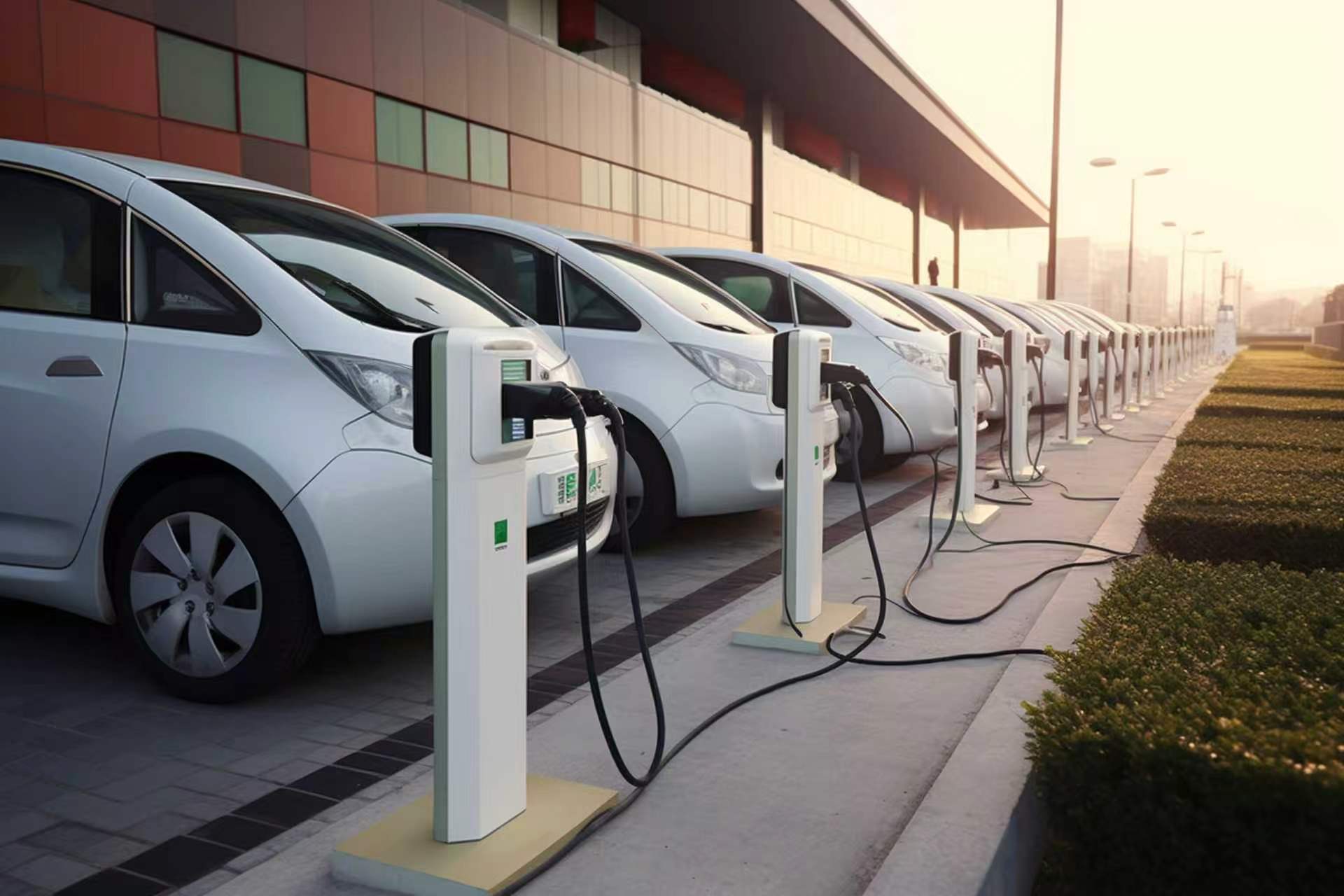
First and most immediately, EV adoption depends on infrastructure that the Philippines currently lacks. Charging stations are sparse to nonexistent. There are less than 1,000 publicly accessible charging stations all over the country. Range anxiety is not just a psychological barrier; it is a practical one. Without a robust and accessible charging network—spanning urban centers, highways, and provincial areas—consumer uptake will remain limited. Infrastructure development must therefore proceed in tandem with vehicle production, not as an afterthought.
Second, and more fundamentally, EVs only make economic sense if electricity is affordable. At present, the Philippines has among the highest electricity rates in Asia—Meralco’s April 2026 rate stood at P14.35 per kilowatt-hour kWh) compared to roughly P5 to P8 per kWh in neighboring countries like Vietnam and Indonesia. Charging an EV with expensive, coal-dependent electricity merely swaps one form of fossil fuel dependence for another. That is why locally generated renewable energy is not a complement to the EV transition—it is a prerequisite.
Third, EVs do not solve the problem of traffic congestion. In fact, by lowering operating costs, they could inadvertently encourage more private vehicle ownership, worsening Metro Manila’s already nightmarish gridlock. The real long-term and people friendly solution to urban mobility is not more cars—electric or otherwise—but a massive expansion of low-carbon public transportation: dedicated bike lanes, efficient train systems, and modernized jeepney fleets. EVs should be part of the solution, not an excuse to delay investments in mass transit.
Finally, there is the question of supply chains. The production of EVs relies on critical minerals such as lithium, cobalt, and nickel—resources that are often extracted under environmentally and socially problematic conditions. The Philippines is blessed with rich reserves of nickel, copper, and gold, which give it a natural advantage in serving supply chain needs. However, nickel mining in the Philippines, particularly in the Caraga Region and Palawan, has come under intense scrutiny for its severe environmental, climate, and human rights impacts.
A November 2025 report by Climate Rights International (CRI), titled “Broken Promises,” along with investigations by Amnesty International and Electronics Watch, found that the scramble for nickel—a key component in electric vehicle (EV) batteries—has led to significant deforestation, water pollution, and human rights abuses in local communities. Another recent report Lead the Charge Auto Supply Chain Leaderboard authored by over 20 global climate groups have also raised concerns about the transparency and sustainability of supply chains in the automotive industry, with some Japanese manufacturers lagging far behind their international counterparts in responsible sourcing practices, with Toyota flailing at the bottom of the rankings. As the Philippines enters this industry, it must do so with eyes wide open. Strong regulatory frameworks, supply chain transparency, and adherence to environmental and human rights standards are non-negotiable if the transition is to be truly green.
The EV transition is certainly not a silver bullet. Careful planning and comprehensive reforms must complement for the Philippines to gain the most advantages from this first step.
The government and industry must prioritize three key pillars. A shift toward low-carbon, public-oriented transportation systems that reduce reliance on private vehicles altogether; a decisive push for locally generated renewable energy to bring down electricity costs and enhance energy security; and, thirdly, the establishment of green, responsible, and transparent supply chains that align with global best practices.
If approached thoughtfully, the EV initiative could unlock benefits far beyond the automotive sector. It could drive innovation, strengthen infrastructure, and position the Philippines as a model for sustainable development among archipelagic nations. More than just a response to a fuel crisis, it could become the foundation of a broader transformation—one that reimagines how energy, mobility, and industry intersect in the 21st century.
About the Author:
Tom Wang is the Executive Director of Manila-based climate advocacy non-profit group People of Asia for Climate Solutions.