BANGKOK, Thailand —People of Asia for Climate Solutions (PACS), Renewables First, and the Asian Peoples’ Movement on Debt and Development (APMDD), and over a dozen NGO leaders from the Global South, convened during the recently concluded Bangkok Climate Action Week 2026 to share and learn about China’s energy policies, overseas investment practices, and implications for renewable energy development in Asia and the Global South.
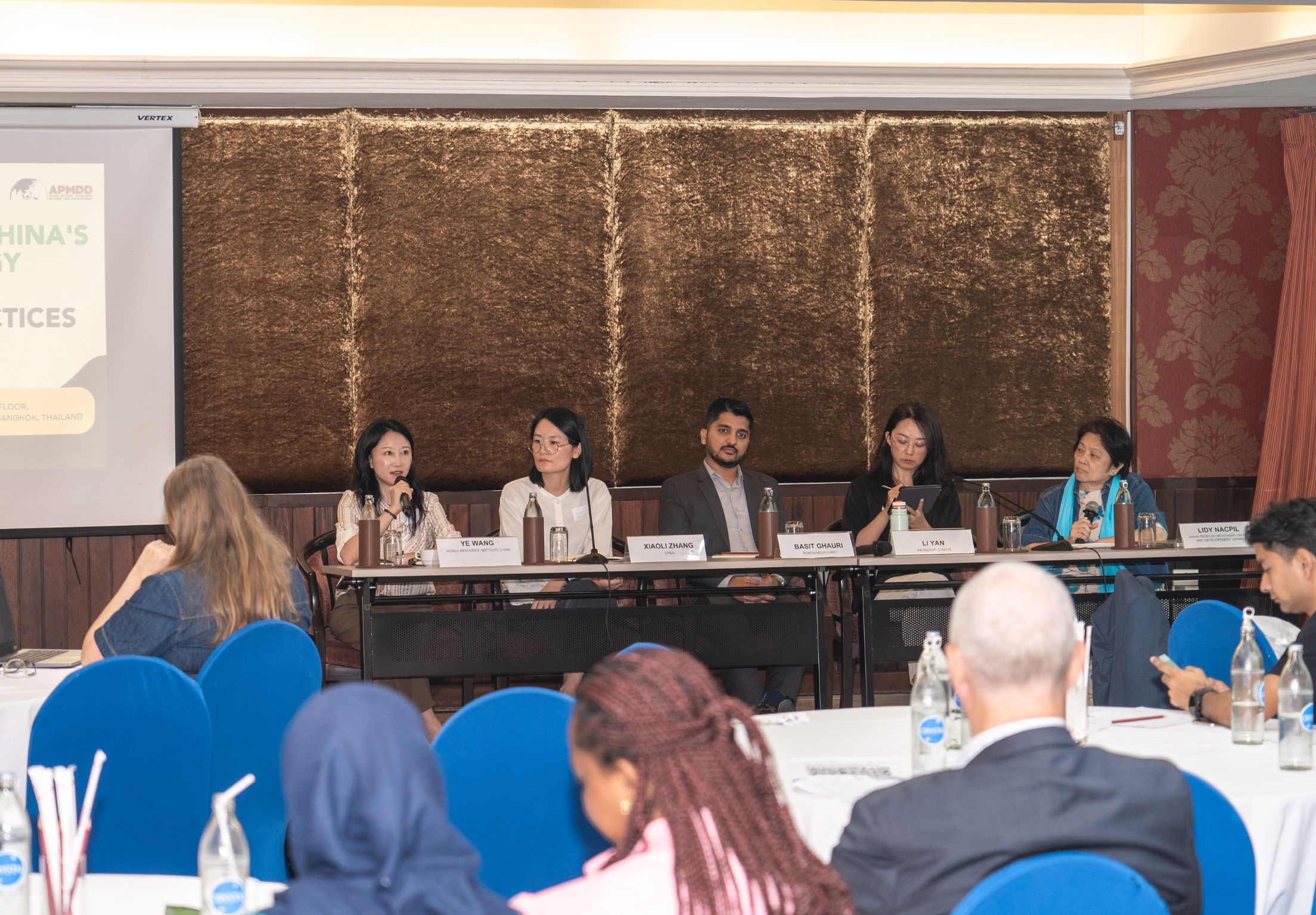
NGOs, think tanks, and government offices from Southeast Asia, South Asia and Africa discussed the role Chinese institutions play in accelerating renewable energy development abroad, particularly in countries across the Global South.
The Strategy Meeting brought together Chinese lawyers, researchers, industry watchers, and practitioners to share China’s latest energy trends and overseas investment policies. Participants from NGOs, think tanks, and government offices from Southeast Asia, South Asia and Africa, joined discussions to better understand the critical role Chinese institutions can play in accelerating renewable energy development abroad, particularly in countries across the Global South.
Discussions covered China’s energy priorities under its 15th Five-Year Plan, the regulatory frameworks governing overseas investment, the roles of state-owned enterprises and private companies, and how policy banks and other financial institutions help structure energy projects.
Participants also examined the different roles Chinese companies and financiers play in overseas renewable energy projects, including equipment supply, construction, project ownership, and financing. These distinctions matter because the benefits and responsibilities associated with a project depend on who builds it, who owns it, who finances it, and who participates in its long-term operation.
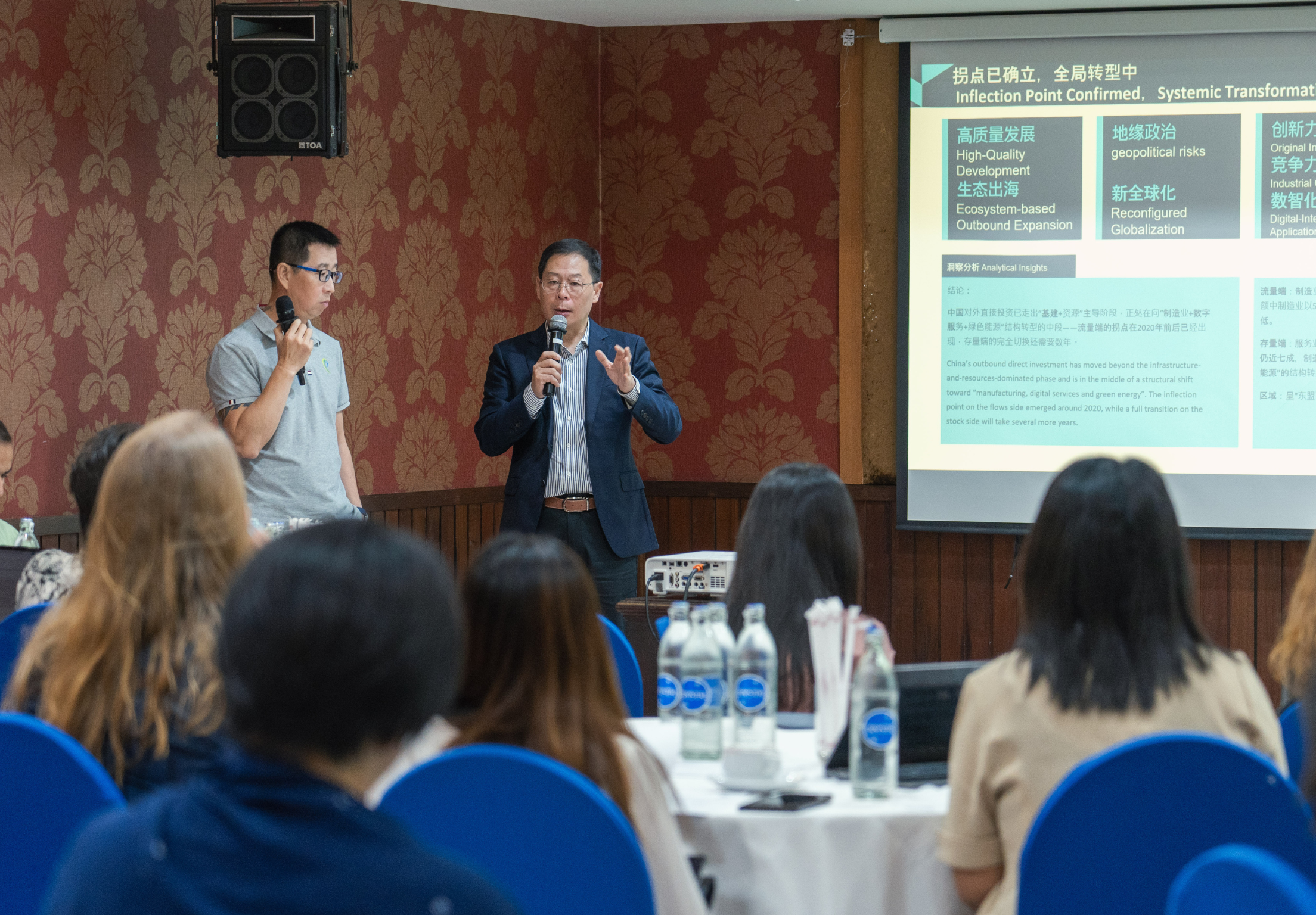
A central concern was how countries receiving Chinese investment and technology can strengthen their ability to negotiate partnerships that respond to local priorities. Discussions highlighted the importance of understanding the different actors involved, improving project preparation, coordinating among financial institutions, and building relationships between Chinese partners and institutions in host countries.
It also underscored the need to look beyond the delivery of renewable energy infrastructure. International cooperation can create broader value when it supports technology transfer, local skills development, employment, and stronger domestic capacity.
For civil society organizations and other stakeholders working to accelerate the energy transition, understanding China’s policies, institutions, and decision-making processes can help identify opportunities for engagement and more effective cooperation.
Connecting Local Experiences with Regional Cooperation
As countries across Asia work to expand renewable energy and strengthen energy security, sharing experiences and learning from one another can help identify practical solutions. Community initiatives can offer lessons for local governments, while deeper understanding of international investment and financing can help countries pursue partnerships that build local capacity and deliver lasting benefits.
“We need to strengthen political and diplomatic engagement with China and build a deeper understanding of how China operates among different actors in our countries. This means bringing together countries across Africa and Asia, coordinating engagement with Chinese embassies, and creating spaces for high-level, multi-stakeholder dialogue on what the Global South needs from China. We can also build momentum toward COP32, while pursuing a distinct strategy to advance the phase-out of China-backed coal,” said Lidy Nacpil, Coordinator at APMDD.
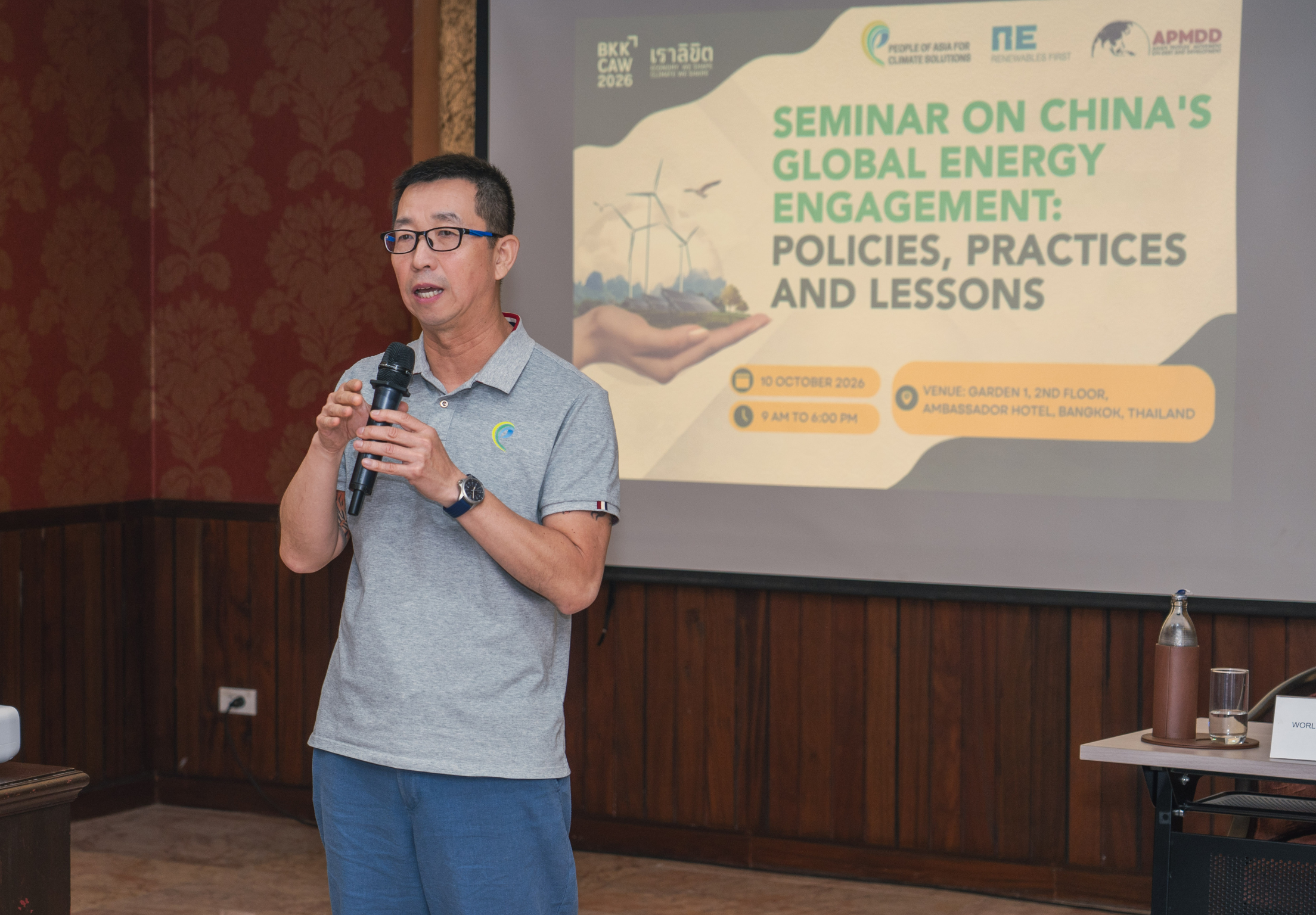
Xiaojun Wang, Executive Director of PACS, emphasized the opportunities for China–Global South cooperation
under China’s latest development priorities.
Echoing the call for deeper engagement, Xiaojun Wang, Executive Director of PACS, highlighted the emerging opportunities for China–Global South cooperation under China’s latest development priorities, while emphasizing the need to better understand the policies and actors shaping these partnerships.
Wang said, "In China's 15th Five-Year Plan (2026-2030), new emphasis has been put onto the climate and energy collaboration between China and the Global South countries. At the same time, the new ambition to build 100 national-level Zero-Carbon Industrial Parks in China also opens opportunity windows for further green industrialization that covers beyond the energy sector. However, the deepening of such collaborations requires deepened knowledge about China's policies, corporate practices, and who-is-who."
The convening is part of PACS’ continuing BRIDGE (Belt and Road Directed towards Green Energy) program, which seeks to support the global energy transition and drive decarbonization, climate action, and climate change mitigation by leveraging China's renewable energy capacity.
Media Contact:
Leovy C. Ramirez (she/her)
Communications Officer
+639156618382